A winter morning in the Andes can look very different from one week to the next. You might wake up to bright sun over fresh snow, or a storm rolling across the mountains that changes road access and ski conditions by the hour. That is why one of the first questions travelers ask is when is Chile ski season – and the better answer is not just a date range, but which part of the season best fits the trip you want.
For most travelers, Chile ski season runs from mid-June through late September, with occasional early openings in June and some resorts extending into early October if snowfall allows. If you are planning a ski holiday near Santiago, the sweet spot is usually July through early September. That period tends to offer the most reliable combination of terrain, snow coverage, and resort operations.
When is Chile ski season in practical terms?
On paper, the season begins in the Chilean winter, which starts in June. In reality, opening dates depend on snowfall, temperatures, and road conditions in the Andes. Some years begin strongly, with solid early storms that allow resorts to open more terrain by mid-June. Other years start more slowly, and the best skiing arrives later.
This matters if you are visiting Chile with limited time and want your ski days to feel effortless rather than uncertain. If skiing is the centerpiece of your trip, late June can work beautifully, but July and August are generally safer choices for consistency. By September, conditions can still be excellent, especially after a strong winter, though the experience shifts toward spring skiing with softer afternoon snow and longer daylight.
For guests building a broader Chile itinerary, this flexibility can be a real advantage. A ski stay near Santiago combines especially well with a few city nights, a private wine country day, or a transition to the Atacama or Patagonia after the mountain portion of the journey.
Best months for skiing in Chile
June: early season potential
June is the start of the conversation, not always the peak of it. If winter storms arrive early, June can surprise travelers with fresh snow, quieter slopes, and a very attractive sense of having the mountains just as the season begins. The scenery is dramatic, and the resorts feel energized.
The trade-off is predictability. Terrain may be limited early in the month, and conditions can vary significantly from one week to the next. For travelers who value certainty, especially families coordinating a polished, time-sensitive vacation, June is best approached with a little flexibility.
July and August: the core of Chile ski season
If you want the most dependable answer to when is Chile ski season, July and August are the heart of it. This is when snowpack is usually strongest, lift operations are in full swing, and the resorts around Santiago are most likely to deliver the classic Andes ski experience travelers imagine.
These months are ideal for first-time visitors to Chile who want to minimize guesswork. The mountain landscape is typically at its most wintery, and there is a stronger chance of broad terrain access. For confident skiers and beginners alike, this period usually offers the best overall balance of coverage and atmosphere.
There is one nuance worth keeping in mind. Because this is prime season, mountain access and resort logistics matter more. Travel time from Santiago can change with weather, weekend traffic, and snow-control measures on mountain roads. For guests who prefer a smooth, private experience, planning transport carefully makes a noticeable difference.
September: spring light, softer snow, and fewer crowds
September is often overlooked, which is part of its appeal. In a good snow year, skiing can still be very rewarding, especially in the morning when conditions are firmer. By afternoon, the snow often softens, creating a more relaxed spring-ski feel.
This is an excellent month for travelers who appreciate a gentler rhythm. The days are brighter, the views are expansive, and the mountain experience can feel less intense than peak winter. If your trip combines skiing with other interests such as vineyards, Santiago dining, or scenic day touring, September can be particularly elegant.
What affects ski conditions in Chile?
Snowfall is the obvious factor, but it is not the only one. Elevation plays a major role, and the Andes near Santiago benefit from high-altitude terrain that can preserve snow well once the base is established. Storm timing also matters. A heavy week of snow can transform the mountain, while warm stretches can affect lower slopes more quickly.
Road access is another practical consideration that experienced planners never ignore. Mountain weather can be beautiful in Santiago and completely different higher up. Even on a clear day in the city, chain controls or temporary road delays may affect travel to the resorts.
That is why the best ski planning in Chile is about more than choosing dates. It is about coordinating your arrival time, departure timing, weather monitoring, and transport support so the day feels calm from start to finish.
Which part of Chile ski season is best for your trip?
The right timing depends on what you want most from the experience.
If your priority is the highest chance of strong snow coverage, aim for mid-July through late August. If you prefer a polished winter trip with skiing as one part of a larger Chile itinerary, late August and early September can be especially appealing. If you are comfortable with a little variability and enjoy the excitement of early winter, late June may reward you with beautiful conditions.
Families often do best during the core season, when resort services and ski school operations are running at full pace. Couples sometimes prefer the shoulder edges of the season, when the atmosphere feels a touch more relaxed and the itinerary can flow naturally into wine country, Santiago, or another region.
Ski season near Santiago
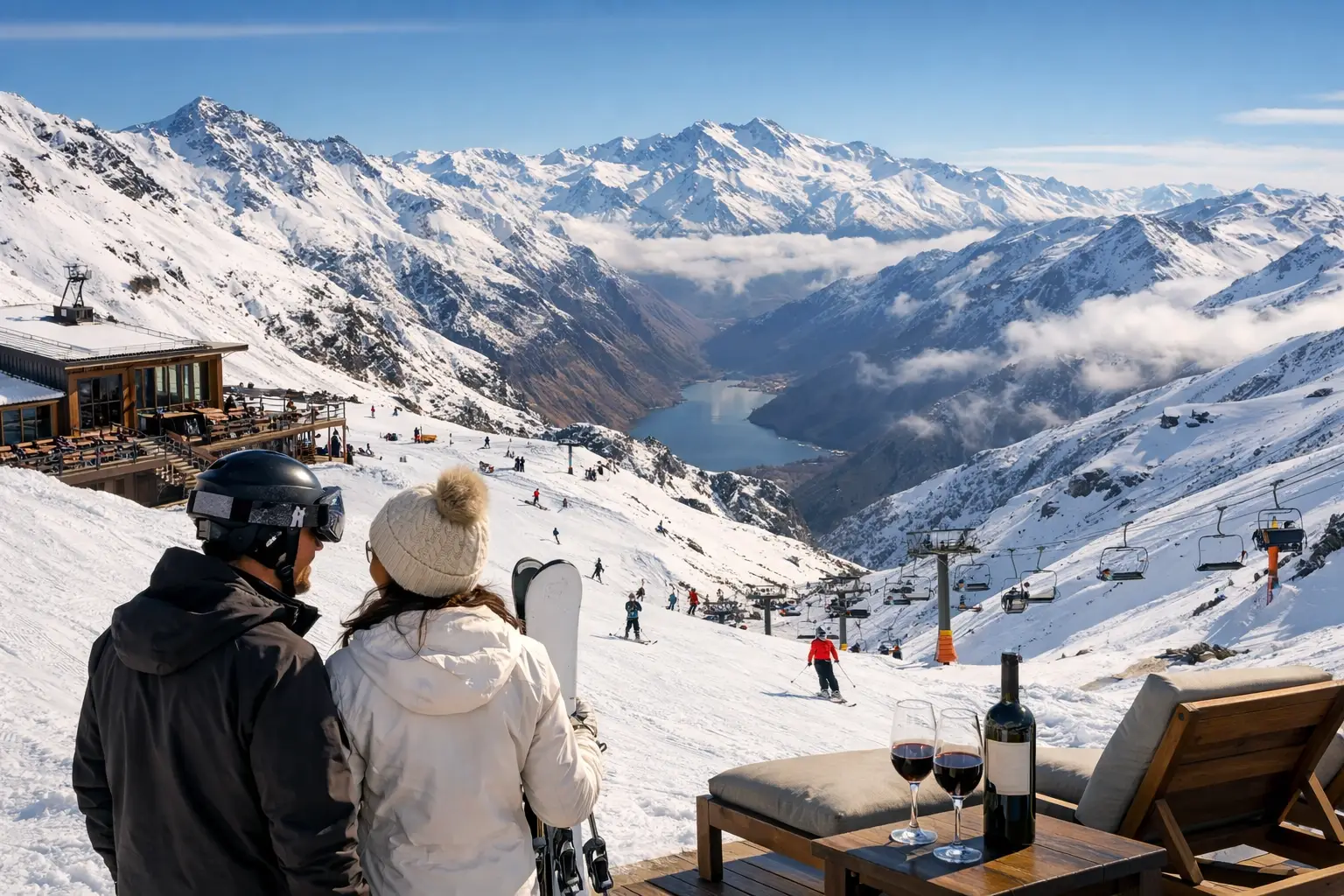
For international visitors, the major advantage of skiing in Chile is proximity. Santiago offers relatively quick access to well-known Andes resorts, which means you can land in a sophisticated capital city and be in the mountains the same day or soon after, depending on weather and timing.
That convenience is one of Chile’s great luxuries, but it only feels luxurious when the details are handled properly. Winter mountain travel is not complicated when planned well, yet it is not something most visitors want to improvise. Departure windows, traffic patterns, resort entry timing, and changing weather all shape the day.
For travelers staying in Santiago’s leading hotels or arriving on a tight international schedule, private ski transport is often the difference between a rushed day and a very smooth one. This is especially true for families with children, couples on a special trip, or executive travelers fitting ski days into a broader business or leisure stay.
How far in advance should you plan?
For prime Chile ski season, earlier is better, especially if you want the strongest hotel options in Santiago, premium ski-side coordination, or a customized itinerary that combines several regions. July and August are not the months to leave key arrangements to chance.
That does not mean you need to lock every detail too early. The most effective approach is usually to reserve the structure of the trip well in advance, then fine-tune ski days closer to arrival as snowfall patterns become clearer. This gives you both security and flexibility, which is often the ideal balance for high-end travel.
If you are visiting during a shorter Chile vacation, consider how skiing fits with the rest of your plans. A well-paced itinerary can include a few mountain days without making the trip feel overly packed. The goal is not to do everything. It is to make each part of the journey feel thoughtfully timed.
A few expectations worth setting
Skiing in Chile is memorable because the Andes feel dramatic, high, and distinctly South American. It is not a copy of the Alps or the Rockies, and that is exactly the point. Conditions can be excellent, but mountain operations still respond to weather in real time, as they do anywhere serious skiing takes place.
That means the best Chile ski trips are planned with confidence rather than rigidity. Travelers who enjoy the experience most are usually the ones who build in a little room for nature, trust local timing, and treat logistics as part of the service standard rather than an afterthought.
If you are asking when is Chile ski season, the clearest answer is this: plan for mid-June through late September, target July or August for the most reliable winter conditions, and choose September if you prefer a sunnier, more relaxed mountain rhythm. Once your dates align with the kind of trip you want, the rest becomes much easier to shape well.
A great Chile ski journey is not only about catching snow at the right moment. It is about arriving in the mountains feeling looked after, with every transition handled so you can focus on the view, the air, and the day ahead.