A week in Chile can leave you with a very specific kind of dilemma: Torres del Paine or Atacama? Both are iconic, both feel extraordinary, and both reward thoughtful planning. The difference is not which one is better. It is which one matches the trip you actually want to have.
For some travelers, the answer is immediate. They want glaciers, dramatic granite peaks, and days that feel cinematic from the first look out the window. Others picture silence, desert light, high-altitude lagoons, and evenings under one of the clearest night skies on earth. If you are choosing between the two, the smartest approach is to think less about bucket-list reputation and more about pace, comfort, season, and how you want each day to feel.
Torres del Paine or Atacama: the core difference
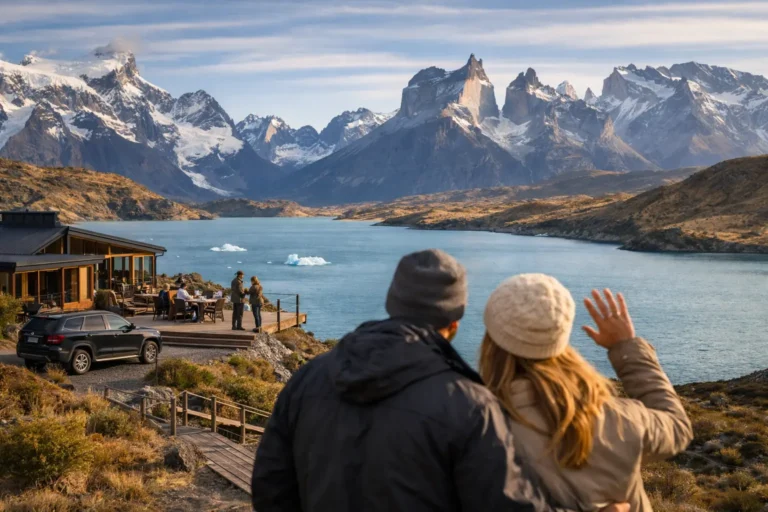
Torres del Paine is about scale and movement. Even when experienced privately and comfortably, Patagonia invites you outward. The landscape is powerful and exposed, with mountain weather, wide open roads, turquoise lakes, and wildlife appearing against enormous backdrops. The reward is visual drama at almost every turn.
Atacama is about contrast and atmosphere. The desert reveals itself in layers: salt flats, volcanoes, lunar valleys, flamingo-filled lagoons, geothermal fields, and villages shaped by centuries of life in an extreme environment. The scenery changes constantly, but the emotional rhythm is often calmer, more contemplative, and surprisingly refined when the itinerary is well paced.
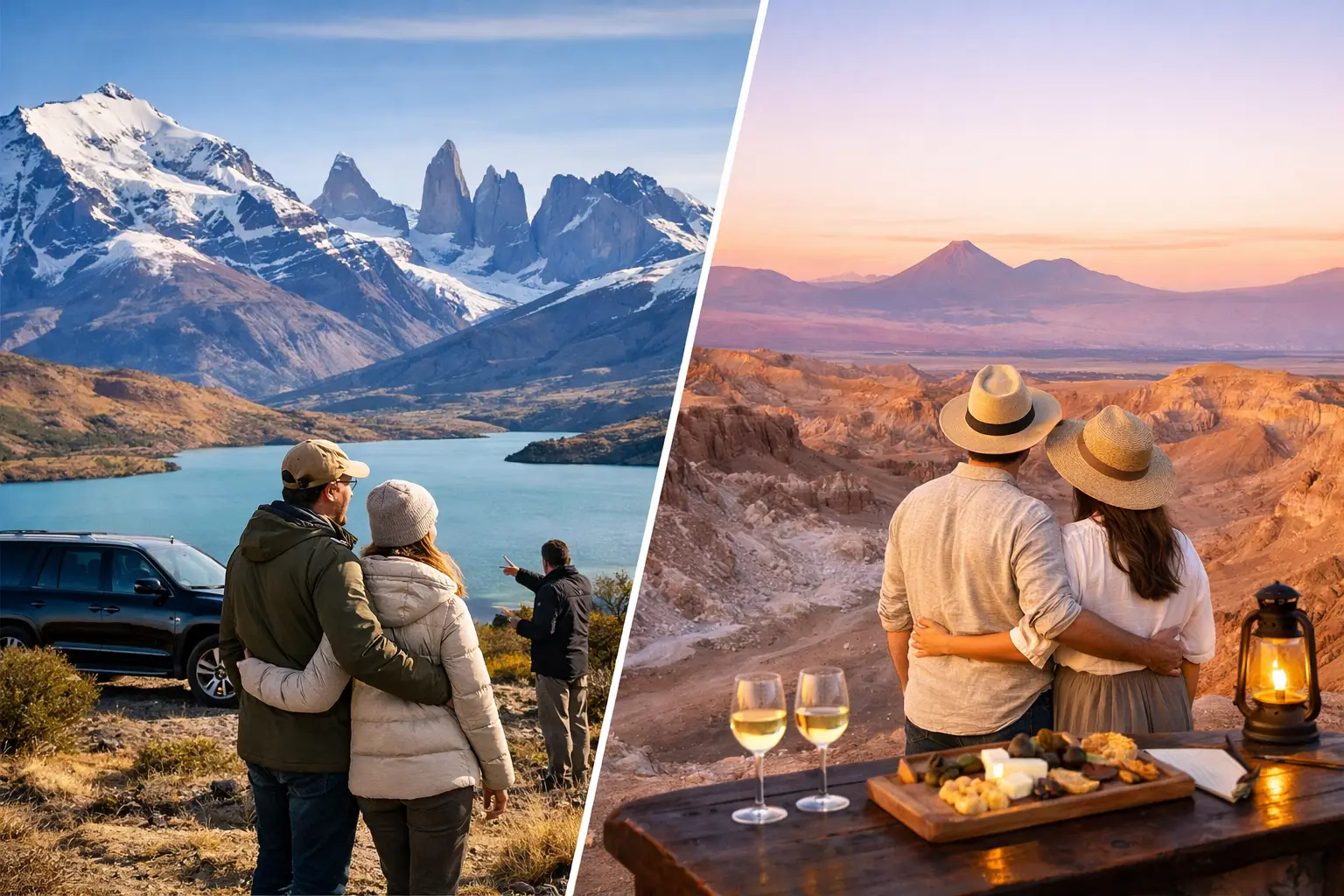
If Patagonia feels epic and kinetic, Atacama feels otherworldly and precise. Neither experience is interchangeable.
Choose Torres del Paine if you want Patagonia at full scale
There is a reason Torres del Paine leaves such a deep impression on first-time visitors to Chile. It offers one of those rare combinations of raw nature and genuine comfort when planned properly. You can spend the day crossing beautiful viewpoints, enjoying soft-adventure excursions, photographing guanacos and condors, and returning in the evening to excellent hospitality and a warm fire.
This is often the stronger choice for travelers who want a sense of grandeur. Honeymooners, photographers, and families celebrating a milestone tend to respond to that emotional impact. The park feels expansive in a way that is difficult to describe until you are there.
That said, Patagonia asks more from the traveler. Weather shifts quickly. Wind can be strong. Distances are longer than many visitors expect. Even with private logistics and a comfortable itinerary, the region feels more remote and more elemental than northern Chile. For many guests, that is exactly the point. For others, especially those who prefer gentler climate conditions and easier day-to-day pacing, it may be less appealing.
What days feel like in Torres del Paine
A well-designed stay in Torres del Paine usually revolves around scenic drives, curated walks, private excursions, and flexible timing based on weather and interest. One day may focus on the classic viewpoints and lake crossings. Another may center on wildlife, ranch culture, or a slower route with fewer stops and more time to absorb the setting.
The best version of Patagonia is not rushed. It benefits from having room to adapt. Clouds may change the mood of the mountains in minutes, and a private structure matters because it allows the day to respond to conditions rather than forcing a fixed plan.
Choose Atacama if you want variety without constant effort
Atacama often surprises travelers who assume desert means monotony. In reality, it delivers a remarkable range of experiences within a relatively compact area. In a few days, you can move from vast salt landscapes to high-altitude lagoons, from geyser fields at sunrise to slow sunset moments in the valley, then finish with sophisticated dining and stargazing.
For travelers who value comfort, Atacama has a particular advantage: the region lends itself well to elegant, well-paced exploration. You can experience a great deal without feeling as physically stretched as you might in Patagonia. Days can be active, but they do not always need to feel demanding.
At the same time, Atacama has its own trade-offs. Altitude is a real factor, especially on certain excursions. The climate is dry, sun exposure is intense, and some of the most memorable sites involve early starts. The desert can also feel more subtle than Patagonia at first glance. Its beauty reveals itself through texture, color, silence, and space, not only through obvious spectacle.
What days feel like in Atacama
A strong Atacama itinerary balances altitude, recovery time, and changing scenery. One morning may begin in the calm of a desert plain with volcanoes in the distance. Another may bring high Andean lagoons and wildlife. Evenings often become a highlight because the light is exceptional and the atmosphere in and around San Pedro de Atacama feels intimate rather than urban.
This is an excellent choice for couples and private travelers who want a sense of discovery without sacrificing ease. The desert rewards thoughtful pacing, and the overall experience can feel very polished when every transfer, timing decision, and excursion sequence is handled with care.
Torres del Paine or Atacama for couples, families, and first-time visitors
For couples, the choice often comes down to mood. Torres del Paine is more dramatic and emotional, ideal for travelers drawn to iconic scenery and a sense of escape at the edge of the world. Atacama is more intimate and atmospheric, especially for couples who enjoy design-forward stays, star-filled evenings, and varied experiences that do not all revolve around one visual theme.
For families, age and energy matter. Torres del Paine can be magnificent for families who enjoy nature and are comfortable with longer scenic days. Atacama tends to be easier for multigenerational travel because the logistics are more compact, though altitude should be considered carefully.
For first-time visitors to Chile, the decision often depends on what they imagine when they think of a once-in-a-lifetime South American landscape. If that image is mountains, lakes, and glaciers, Patagonia usually wins. If it is desert silence, geology, and the feeling of being somewhere truly unlike home, Atacama is often the stronger fit.
Weather, season, and comfort
This is where the decision becomes practical.
Torres del Paine is highly seasonal in feel, even when it is available year-round. Spring and summer generally offer longer daylight and easier sightseeing conditions, though the wind remains part of the Patagonia experience. Autumn can be beautiful, with richer tones and fewer visitors in some periods. Winter brings a very different atmosphere, quieter and more dramatic, but it is not the right match for every traveler.
Atacama is more consistent across the year, which makes it attractive for travelers with fixed dates. Days are usually sunny, nights can be cold, and the desert climate remains dry in all seasons. This predictability is useful if your trip needs to fit neatly into a broader Chile itinerary.
In comfort terms, neither destination is inherently more luxurious, but they express luxury differently. In Torres del Paine, luxury often means privileged access to space, expert planning in a remote region, and the ability to experience wild scenery without friction. In Atacama, luxury often feels more about rhythm, atmosphere, and the quality of each moment between excursions.
Which destination works better with limited time?
If your Chile trip is short, Atacama is often the easier choice. It delivers strong visual contrast and a satisfying sense of place in a relatively efficient format. That matters for travelers who want a memorable long weekend or who are combining destinations without wanting too many moving parts.
Torres del Paine deserves a bit more time. It can absolutely be done in a shorter window, but the region is best appreciated when you are not treating it as a quick photo stop. The journey there, the scale of the park, and the value of weather flexibility all favor a more generous schedule.
This does not mean Patagonia is harder. It means it benefits more from careful spacing.
Can you do both?
Yes, and for some travelers that is the ideal answer. Torres del Paine and Atacama complement each other beautifully because they show two entirely different faces of Chile. One is glacial, windswept, and monumental. The other is dry, luminous, and deeply atmospheric.
But combining them only works well if the trip is long enough and paced intelligently. Trying to squeeze both into a very limited schedule can make Chile feel like a sequence of airports rather than a meaningful experience. When both are included with enough breathing room, the contrast is extraordinary.
For travelers who prefer to do one destination exceptionally well rather than two too quickly, choosing the better personal fit is usually the wiser option.
So, Torres del Paine or Atacama?
Choose Torres del Paine if you want a grand Patagonia experience, dramatic scenery, and the emotional force of mountains and glaciers. Choose Atacama if you want variety, easier year-round planning, refined desert landscapes, and a trip that balances adventure with gentle rhythm.
The best choice is rarely the one with the bigger name. It is the one that fits your travel style, your dates, and the kind of memories you want to carry home. If you begin there, Chile tends to get the rest exactly right.