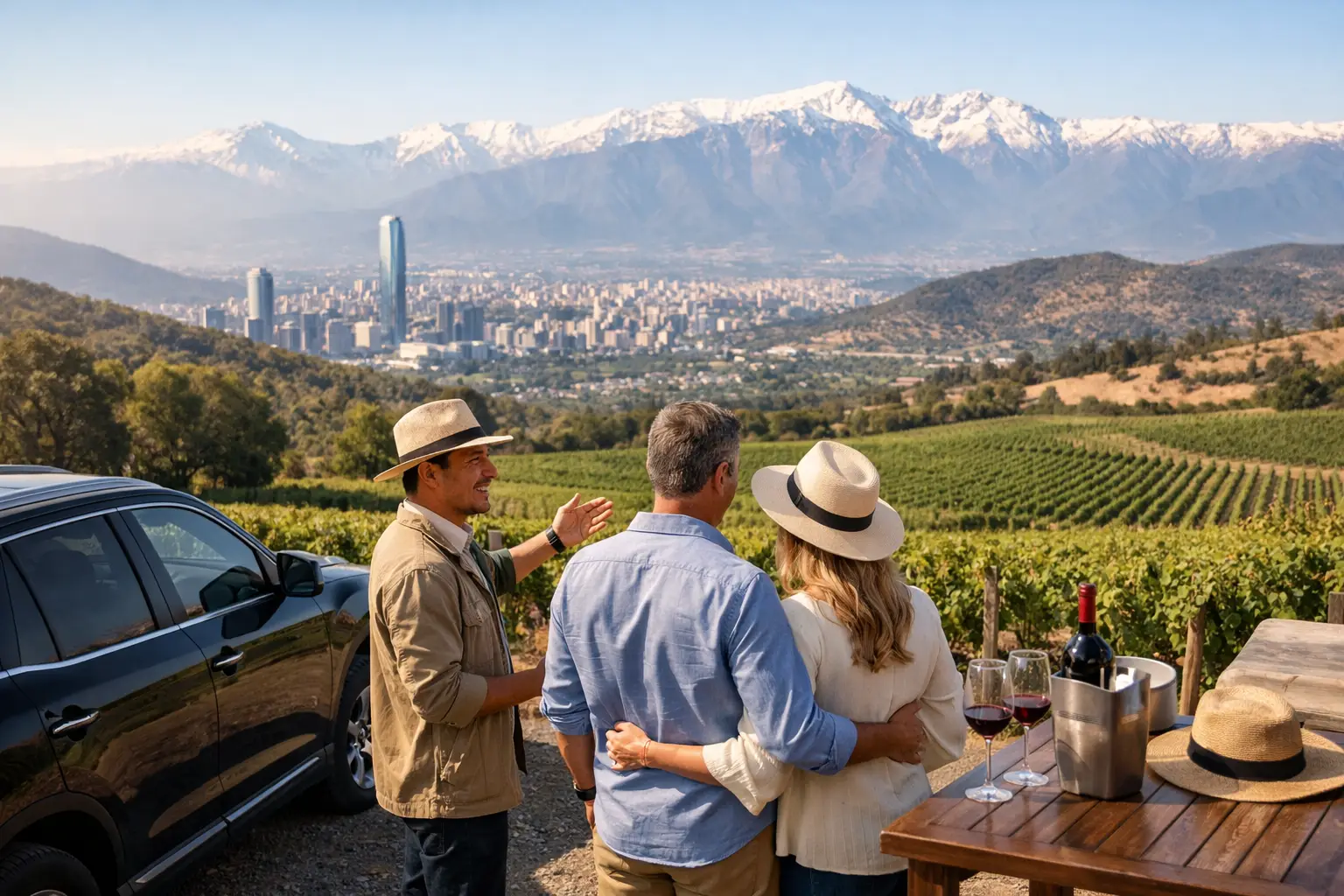
Chile’s wine country is not one destination with a few vineyards attached. It is a series of distinct valleys, each shaped by its distance from the Pacific, elevation in the Andes, soils, and rhythm of life. This guide to Chile wine regions is designed for travelers who want more than a rushed tasting schedule: it is about choosing the valley that suits your palate, your time in Santiago, and the kind of day you want to remember.
For a polished private experience, the difference is often in the details. A vineyard’s architecture, the quality of its lunch, the personality of its winemaker, and the time allowed between appointments can matter as much as the bottle itself. Chile’s leading valleys offer very different versions of a wine day, from elegant Cabernet estates below the Andes to cool-climate Pinot Noir vineyards near the coast.
Guide to Chile Wine Regions: Start With Your Style
If your stay is centered in Santiago, Maipo, Casablanca, and Colchagua are the natural choices. They can all be experienced with private planning, but they should not be treated as interchangeable day trips.
Maipo is the most convenient choice for guests who value classic reds, historic properties, and a refined day close to the city. Casablanca offers a cooler landscape and fresh, expressive white wines, often paired beautifully with a visit to Valparaíso or the Pacific coast. Colchagua calls for more time and rewards it with broad valley views, acclaimed red wines, and a more immersive country-estate atmosphere.
The ideal region depends on what you drink at home, how many days you have in Chile, and whether wine is the centerpiece of the day or part of a wider itinerary. A knowledgeable private guide can also help balance celebrated names with smaller, more personal appointments, where available.
Maipo Valley: Classic Cabernet Near Santiago
Maipo Valley sits southeast of Santiago, framed by the Andes and fed by mountain water. It is Chile’s historic red-wine heartland, particularly known for Cabernet Sauvignon with structure, cassis fruit, herbal notes, and a distinctive sense of place.
For first-time visitors, Maipo is often the most effortless introduction to Chilean wine. The journey from central Santiago is relatively short, which leaves more room for a relaxed cellar visit, a private tasting, and a proper lunch rather than spending much of the day in transit. The scenery changes quickly from city avenues to vineyards with the Andes in view, especially on clear days.
Maipo is best for travelers who enjoy Bordeaux-style reds, want to include wine without committing an entire day to driving, or are visiting Santiago on a compact schedule. It is also a smart option for corporate guests or families with varied interests because the itinerary can remain flexible.
The trade-off is that Maipo feels more connected to the capital than the more rural Colchagua Valley. For some guests, that convenience is exactly the appeal. For others, the goal is to disappear into wine country for the day. There is room for both experiences in Chile.
What to taste in Maipo
Begin with Cabernet Sauvignon, but do not stop there. Look for Carmenere, Chile’s signature rediscovered grape, along with elegant Syrah and Cabernet Franc. In the higher or cooler sectors of the valley, wines can show more freshness and restraint than visitors expect from a region famous for powerful reds.
Casablanca Valley: Coastal Whites and Fine Pinot Noir
Travel west from Santiago toward the Pacific, and the temperature drops. Casablanca Valley is shaped by morning fog and ocean influence, creating conditions that favor Sauvignon Blanc, Chardonnay, Pinot Noir, and increasingly compelling cool-climate Syrah.
This is the region for travelers who prefer lively whites and lighter, more aromatic reds. A well-planned Casablanca day can feel especially graceful: vineyard tastings in the late morning, a leisurely lunch, then an afternoon continuation toward Valparaíso or the coast. The route is appealing for couples and families who want wine, landscape, and a change of scene in one private day.
Casablanca is not simply a white-wine destination. Its best Pinot Noirs can be poised and savory, with red-fruit character and bright acidity. Chardonnay ranges from crisp and mineral to richer, barrel-aged styles, so it is worth sharing your preferences in advance. That allows appointments to be selected around your palate rather than arranged by proximity alone.
Because the valley’s weather is cooler, layers are useful even when Santiago is warm. A sunny coastal afternoon can still begin with a fresh morning breeze among the vines. Spring and fall are particularly lovely, while summer brings long, bright days and a welcome contrast to the heat of the capital.
Colchagua Valley: A Full-Day Wine Country Escape
Southwest of Santiago, Colchagua Valley offers a more expansive wine-country atmosphere. The drive is longer, but the reward is a day that feels less like an excursion and more like a private retreat among vineyards, hills, and traditional hacienda landscapes.
Colchagua is celebrated for Carmenere, Syrah, Cabernet Sauvignon, and bold blends. The valley’s warmer conditions tend to produce generous, sun-ripened wines, though elevation and specific vineyard sites bring welcome balance. For guests who appreciate fuller-bodied reds, this is often the most satisfying choice.
The region is particularly suited to travelers who have the time to slow down. Rather than trying to fit several wineries into a tightly packed schedule, consider two thoughtful visits with a long lunch between them. A private table overlooking the vines, time to walk the grounds, and the freedom to linger over a favorite pour can turn a good tasting day into a memorable one.
Colchagua makes sense as a full-day experience from Santiago, though an overnight stay nearby offers an even more unhurried rhythm for wine-focused travelers. It is a strong choice for honeymooners, collectors, and guests celebrating a special occasion.
What to taste in Colchagua
Carmenere deserves special attention here. At its best, it is plush but not heavy, with dark berries, spice, violet, and an herbal edge. Syrah can be equally impressive, from peppery and refined to deeply concentrated. If you enjoy complex red blends, ask for a comparative tasting that shows how producers use different parts of the valley.
Beyond the Main Three: Wine Regions Worth Planning Around
Chile’s wine map extends far beyond the valleys closest to Santiago. For travelers continuing north or south, wine can add an unexpected dimension to a wider itinerary.
Aconcagua Valley, north of Santiago, offers both warm-climate reds and fresher wines from coastal sites. It can work well for guests with a particular interest in Syrah, Cabernet Sauvignon, or experimental, terroir-driven producers. The Elqui Valley, farther north, is known as much for its dramatic mountain-desert scenery as for its small-scale wine production, creating an unusual contrast for travelers visiting the Atacama region.
To the south, the Itata and Bío Bío regions are increasingly admired for old-vine País, Cinsault, and fresh, characterful wines. These areas are more specialized choices, ideal for serious wine enthusiasts with a longer Chile itinerary and an appetite for discovering styles that feel very different from the country’s classic Cabernet profile.
How to Plan a Private Wine Day Well
The finest wine day is rarely the one with the most appointments. Two or three complementary visits are usually enough, particularly when tastings are hosted privately or include a vineyard walk, barrel-room visit, or chef-led lunch. Too many stops can flatten the experience and make the wines blur together.
Share your preferences before the itinerary is confirmed. Mention whether you favor crisp Sauvignon Blanc, Burgundy-style Pinot Noir, mature Cabernet, or rich South American reds. Also note any dietary requirements, mobility considerations, children traveling with you, or a desire for art, architecture, gastronomy, or scenic photography alongside wine. These details shape the right valley and the right wineries.
Timing matters as well. Harvest generally takes place from late February through April, when vineyards are active and energy is high, though appointments can be in demand. Spring, from September through November, brings green vines and mild temperatures. Summer is ideal for long lunches and outdoor terraces, while autumn offers golden color and a quieter, more reflective mood.
Private transportation is especially valuable after tastings, but it also elevates the day before the first pour. You can leave Santiago on your preferred schedule, travel in comfort, keep personal belongings secure, and adjust the pace when a lunch runs long or a view deserves an extra few minutes. ChileRules can arrange a tailored wine day with English-speaking support, premium vehicles, and a sequence of visits chosen around your interests.
A great Chilean wine experience should leave space for conversation, scenery, and the simple pleasure of a bottle that tastes even better because you understand where it came from. Choose one valley well, let the day breathe, and allow Chile’s hospitality to do the rest.